A secluded piece of land can look like the perfect place to escape when things go wrong. A wooded property, a quiet road, and no neighbors in sight might be exactly what you imagine when you think about a survival retreat.
But there’s a difference between a place that feels remote and one that will actually support you during an emergency.
That beautiful property might have unreliable water, a road that floods every spring, or soil that makes building anything surprisingly expensive. And being miles from civilization isn’t much of an advantage if you can’t reach your retreat when you need it.
Choosing a survival retreat location means looking beyond privacy and scenery. You need to consider water, access, natural hazards, land conditions, and whether the property can realistically support the people who might depend on it.
The best retreat isn’t necessarily the most isolated one. It’s the place where you can safely get to, meet your basic needs, and manage problems without depending entirely on outside help.
What Makes a Good Survival Retreat Location?
A good survival retreat location balances security, accessibility, and long-term practicality.
Privacy matters, of course. Most people considering a retreat want some separation from crowded areas, especially during emergencies that could disrupt transportation, utilities, or essential services.
However, isolation comes with responsibilities. You’ll need reliable access to drinking water, enough usable land for your plans, and a reasonable way to reach the property throughout the year.
Think about how you would actually use the retreat. Would it serve as a temporary destination during a regional emergency, a weekend property that doubles as a backup location, or somewhere you could live for several months?
Those are very different arrangements.
A small cabin with stored supplies might be suitable for short stays. A property intended for extended occupancy needs a more dependable water system, sanitation, heating, food storage, and maintenance plan.
It’s also important to consider the hazards you’re trying to avoid. Moving away from a city doesn’t automatically eliminate risk. Rural properties can face wildfires, flooding, severe winter storms, and extended utility outages.
A sensible retreat location reduces your exposure to certain problems without introducing an entirely new collection of them.
Finding a Reliable Water Source
Water should be one of your first considerations when evaluating retreat property.
You can store food, install solar panels, and improve a building over time. Creating a dependable water supply on unsuitable land can be considerably more difficult.
The original survival retreat material makes an important point here: a property without reliable access to water may not be practical for extended occupancy.
A private well is one possibility, but the presence of groundwater doesn’t guarantee that a usable well can be drilled at an affordable cost. Well depth, yield, water quality, local regulations, and drilling conditions all matter.
Before buying property, investigate nearby well records and consult qualified local well contractors. They may be able to explain typical drilling depths and known water-quality concerns, although they cannot guarantee what a particular parcel will produce.
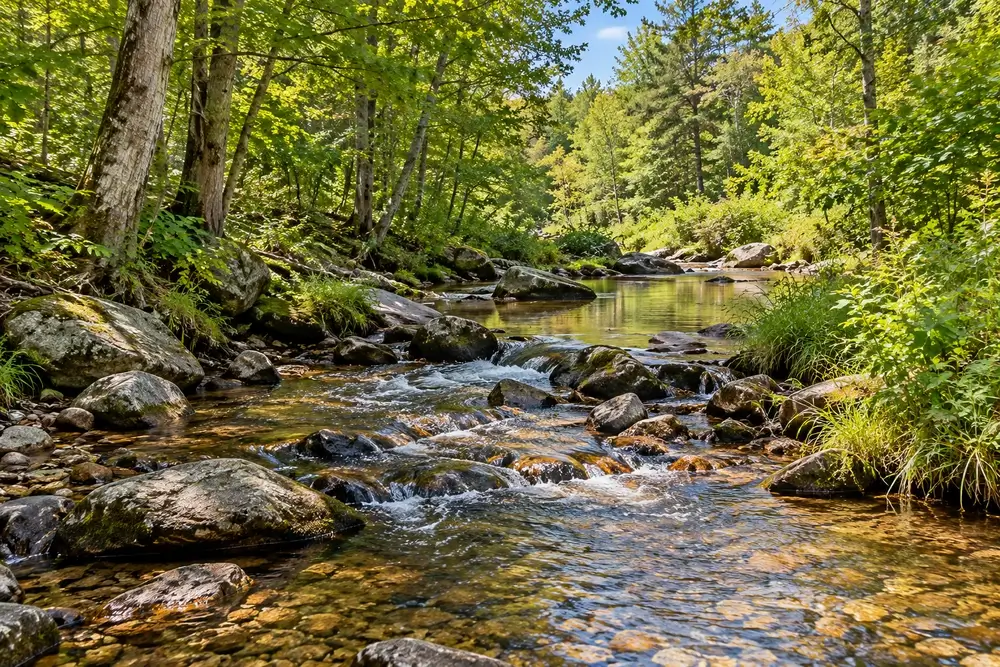
Streams, ponds, and springs can be useful additional resources. However, a stream flowing across a property in April may look very different after a dry summer.
Surface water also requires appropriate treatment before drinking. Clear water isn’t necessarily safe water, and no single treatment method removes every possible contaminant.
Water planning should include storage and a backup method of obtaining or treating water. A retreat that depends entirely on one pump or one source has a vulnerability worth addressing.
Privacy Without Becoming Too Isolated
Privacy is one of the biggest attractions of owning a survival retreat.
There’s something appealing about having enough space that you can step outside without looking directly into a neighbor’s kitchen window.
But privacy and complete isolation aren’t the same thing.
A property surrounded by trees and set back from a public road may offer plenty of separation without requiring a two-hour journey down an unreliable track.
Natural features such as wooded areas, hills, and thoughtful building placement can help provide privacy. They may also influence visibility, drainage, access, and wildfire exposure, so they need to be evaluated as part of the overall property.
Distance from neighbors deserves careful consideration, too.
Having other people nearby isn’t automatically a disadvantage. A dependable neighbor with useful local knowledge may become an important source of assistance during a storm, equipment failure, or medical emergency.
In fact, one of the more useful ideas in the original retreat material is the value of a community where people bring different skills and resources.
You don’t need to know everyone within a twenty-mile radius. But knowing who lives nearby, how to contact them, and whether mutual assistance is possible can be more valuable than complete seclusion.
Distance From Cities and Access to Your Property
Many people assume that the farther a retreat is from a major population center, the better.
Distance can reduce exposure to some urban disruptions, but there isn’t a universal number of miles that makes a property safe.
A retreat twenty miles from a city might be located along a dependable secondary road. Another property fifty miles away could require crossing a flood-prone bridge or traveling through a single mountain pass.
Which one is the better emergency destination?
That depends on the circumstances.
Consider how long the journey normally takes, how many routes are available, and whether you could still reach the property during severe weather or a transportation disruption.
Road access deserves particular attention. A remote driveway may be perfectly manageable during summer but nearly impassable after heavy snow.
Also check whether access is legally established. A road crossing someone else’s property isn’t necessarily yours to use without a recorded easement or other enforceable right.
The practical question isn’t simply how far away the retreat is. It’s whether you can reliably reach it, maintain it, and obtain essential services when necessary.
A retreat that requires heroic effort just to visit on an ordinary weekend may not be the most dependable place to rely on during an emergency.
Checking Flood Risks, Soil, and Groundwater
Some of the most expensive mistakes in buying retreat property happen beneath your feet.
A parcel may appear perfectly suitable until you discover that the soil drains poorly, groundwater sits close to the surface, or the area floods during heavy rainfall.
These conditions can affect foundations, septic systems, access roads, and the feasibility of installing underground structures.
Start by reviewing available flood maps and local flood history. FEMA’s Flood Map Service Center is a useful starting point for properties in the United States, but mapped flood zones don’t capture every possible flooding hazard.
Visit the property after heavy rain when possible. Look for standing water, erosion, washed-out access roads, and signs of drainage problems.
Soil conditions matter just as much.
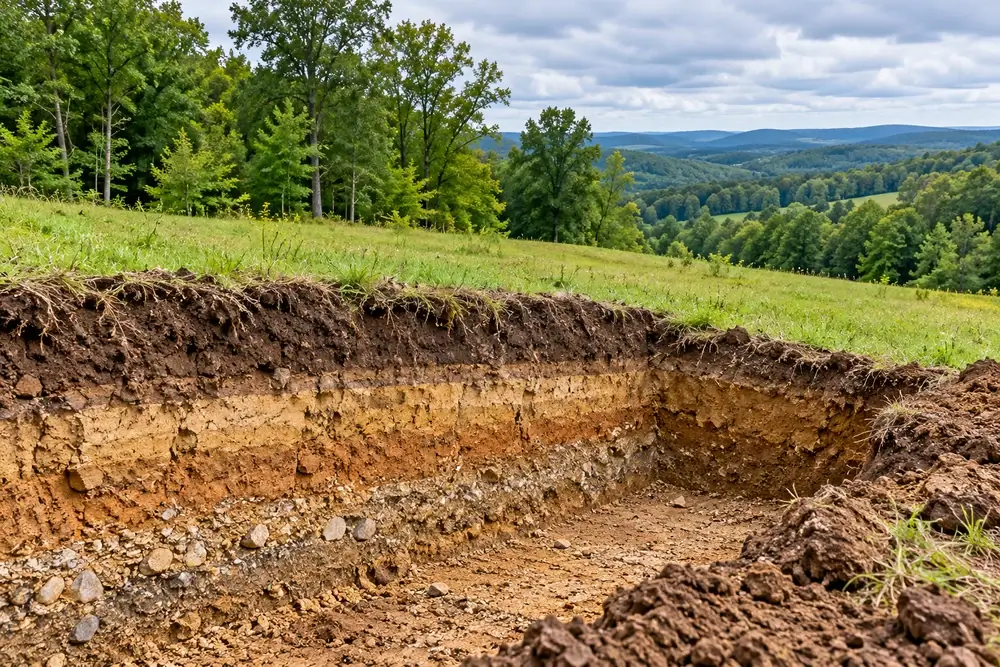
Rocky ground may increase excavation costs. Certain clay soils can create drainage or foundation challenges. Sandy soils may present different issues involving stability, groundwater movement, and septic suitability.
No single soil type is automatically best for every building project.
For serious construction plans, consult qualified local professionals before purchasing or excavating. A geotechnical evaluation, septic suitability assessment, or site-specific drainage review may prevent an expensive surprise.
Underground shelters require especially careful engineering. Groundwater pressure, structural loading, waterproofing, ventilation, emergency exits, and local permits cannot be resolved by simply digging a deeper hole.
A piece of land might look inexpensive until the cost of making it buildable exceeds the original purchase price.
Evaluating Climate and Natural Hazards
A retreat should be selected with local hazards in mind, not just the emergency scenarios that initially motivated the purchase.
In wooded regions, wildfire exposure may be a major consideration. A cabin surrounded by dense vegetation can be attractive, but vegetation management, building materials, access for responders, and evacuation options matter.
In colder climates, winter access and heating reliability become priorities. Snow removal, frozen pipes, fuel storage, and the ability to keep essential systems working during extended outages deserve attention.
Properties in hurricane-prone regions require a different set of considerations, including wind exposure, flooding, storm surge where applicable, and evacuation routes.
Drought can also affect water supplies and vegetation, even in areas that appear suitable during wetter years.
Use local hazard maps, historical records, and professional advice to understand the risks associated with a particular parcel.
The objective isn’t to find land where nothing bad could ever happen. That property doesn’t exist.
It’s to choose a location where the likely hazards are understood and where you can take reasonable steps to manage them.
Considering Neighbors and Nearby Communities
Survival retreats are often imagined as places where people can become completely self-sufficient.
In practice, maintaining a property takes skills, equipment, time, and occasionally another pair of hands.
A broken water pump doesn’t become easier to repair simply because the nearest hardware store is forty miles away.
This is where nearby communities can become valuable.
People with experience in agriculture, construction, electrical systems, equipment repair, or emergency medical care may offer knowledge that helps everyone become more prepared.
That doesn’t mean you need to join a formal preparedness community or share every detail of your plans.
It does mean that building respectful relationships and learning about local resources can be worthwhile.
Before purchasing land, investigate nearby medical facilities, fire services, supply stores, road maintenance, and communication coverage.
A location that provides privacy while maintaining reasonable access to essential support may offer a better balance than one chosen solely for its distance from other people.
Mistakes to Avoid Before Buying Retreat Property
The biggest mistake is falling in love with a property before investigating whether it can support your plans.
A beautiful view can be persuasive. So can a low asking price. Neither tells you much about the reliability of the water supply or the cost of installing a septic system.
Another common mistake is assuming that undeveloped land can be used however you choose.
Zoning restrictions, building codes, environmental protections, minimum dwelling requirements, easements, and permit rules may limit what you can construct or how you can occupy the property.
An underground shelter, off-grid cabin, or permanent recreational setup may require approvals that aren’t immediately obvious from a property listing.
Access is another concern. A property that can only be reached through an informal arrangement with a neighboring owner could become difficult to use if that arrangement changes.
And don’t overlook ongoing expenses.
Property taxes, insurance, road maintenance, vegetation management, equipment repairs, and periodic visits can add up. A retreat that becomes financially difficult to maintain may not remain useful for long.
Before making an offer, identify the conditions that would make the property unsuitable. Then investigate those conditions rather than assuming you’ll figure everything out later.
Choosing a Location You Can Actually Reach and Maintain
The most impressive retreat property isn’t necessarily the most practical one.
A hundred acres of remote wilderness might sound ideal, but maintaining roads, buildings, water systems, and equipment across that property can become a substantial undertaking.
A smaller parcel with dependable access, a verified water supply, manageable hazards, and suitable building conditions may serve your needs considerably better.
Consider how frequently you can visit. Regular visits allow you to inspect equipment, maintain buildings, check supplies, and identify problems before they become serious.
Also think about the people who would use the property.
Children, older adults, and anyone with mobility or medical needs may require different access arrangements, sleeping facilities, sanitation, or emergency services.
A retreat should work for the people who depend on it, not just look good on a map.
Making the Right Survival Retreat Decision
Choosing a survival retreat location involves more than finding a quiet place away from crowded areas.
Reliable water, safe access, suitable ground conditions, manageable natural hazards, and practical connections to nearby resources all deserve attention.
Privacy remains important, but it shouldn’t come at the expense of everything else.
The most useful approach is to evaluate a property the same way you would evaluate any important long-term investment. Investigate the risks, understand the ongoing responsibilities, and make sure the location can genuinely support your intended use.
A survival retreat doesn’t need to be an elaborate underground bunker or a vast wilderness property to provide value.
It needs to be somewhere you can reach, maintain, and depend on within realistic limits.
After all, the point of having a backup place to go is to solve problems, not to purchase a whole new collection of them.